Key Takeaways:
- Website development pricing depends on business goals, functionality, and project scope.
- Different website types require different levels of investment and development effort.
- Custom features and integrations significantly influence project complexity.
- Scalability should be considered from the beginning to support future growth.
- UI/UX design, development, testing, and SEO are essential parts of every website project.
- Hidden expenses such as maintenance, hosting, and software licenses should be included in planning.
- Choosing the right technology stack impacts both performance and long term flexibility.
- Agencies often provide better scalability, expertise, and ongoing support than individual freelancers.
- Building in phases and prioritizing core features helps optimize budgets.
- A secure, SEO-friendly, and high-performing website delivers stronger long term business value.
As businesses continue to invest in their digital presence, one question remains at the center of every project: How much does website development cost in 2026?
The answer depends on several factors, including website complexity, functionality, design requirements, integrations, scalability, and long term business goals. While some websites can be launched with a modest investment, others require custom development and advanced functionality that significantly increase costs.
For startups, SMEs, and established enterprises, understanding website development pricing helps avoid budget overruns and ensures better return on investment. This guide explains everything businesses need to know about website development cost in 2026, including pricing estimates, hidden expenses, budgeting strategies, and how to choose the right development partner.
What Determines Website Development Cost?
There is no fixed price for website development because every business has unique requirements.
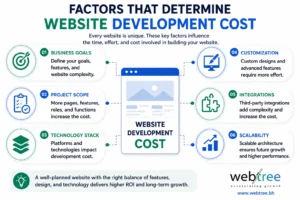
Several factors influence the overall website development cost:
Business Goals
A simple informational website costs significantly less than a lead generation platform, customer portal, or online marketplace.
Project Scope
The number of pages, content requirements, user roles, workflows, and functionality directly impact development time and cost.
Technology Stack
Businesses can choose from platforms such as WordPress, Shopify, WooCommerce, or fully custom frameworks. Each option comes with different development and maintenance costs.
Customization Requirements
Custom designs, advanced animations, interactive features, and unique user experiences require additional development effort.
Third-Party Integrations
Payment gateways, CRMs, ERPs, inventory systems, booking engines, and marketing automation tools add to the project scope.
Scalability
A website built for future growth requires stronger architecture, better hosting infrastructure, and scalable coding practices.
The more tailored a website is to business objectives, the higher the investment. However, a strategically developed website often delivers greater long term ROI.
As customer expectations continue to evolve, businesses increasingly require websites that can support personalization, seamless digital experiences, and future technology integrations. Deloitte’s Digital Consumer Trends research highlights how digital adoption and changing online behaviors are shaping business technology investments. 
Website Development Cost by Website Type
The type of website is one of the biggest factors affecting pricing. For example a simple landing page will cost less than a business website and further an ecommerce website will cost more than a business website. Again, the cost varies according to the requirements or features on the website.
A startup website may require only a few essential pages, while enterprise websites often include custom workflows, integrations, and user portals that significantly increase development complexity.
Website Development Cost Breakdown
Understanding where your budget goes helps you plan more effectively.
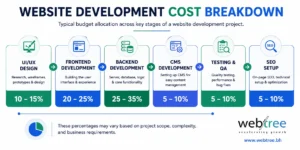
Additional Cost Components
Domain Registration: Usually a recurring annual expense.
Hosting: Varies based on traffic, performance requirements, and server configuration.
UI/UX Design: Creates user journeys, wireframes, and visual designs.
Frontend Development: Builds the customer-facing portion of the website.
Backend Development: Handles databases, business logic, security, and integrations.
CMS Setup: Allows content updates without coding knowledge.
Testing: Ensures functionality, compatibility, security, and performance.
SEO Implementation: Includes technical SEO setup, page optimization, metadata configuration, and performance improvements.
Maintenance: Covers updates, bug fixes, monitoring, and security enhancements.
📖 Also Read
Understanding app development costs is only one part of a successful project. Learn what businesses should expect from a software development partner, including project planning, communication, technology recommendations, and post-launch support.
→ What Should Businesses Expect from a Custom Software Development Company?
Factors That Influence Website Pricing
Number of Pages: Larger websites require more design, development, testing, and content implementation effort.
Design Complexity: Custom designs cost more than template-based solutions but offer stronger branding and better user experience.
CMS Selection: WordPress, Shopify, Magento, and custom CMS solutions each have different implementation costs.
Custom Features: Customer dashboards, calculators, booking engines, portals, and membership systems increase development complexity.
API Integrations: Connecting with CRMs, payment gateways, shipping systems, ERPs, and marketing tools requires additional development resources.
AI Functionality: AI chatbots, recommendation engines, predictive search, and automation features are increasingly common and influence pricing.
Security Requirements: Advanced security measures become essential for websites handling sensitive customer information.
Performance Optimization: Fast loading websites require optimization techniques that add development effort but improve user experience and SEO.
SEO Implementation: Technical SEO setup during development often reduces future optimization costs and improves search visibility.

Hidden Costs Businesses Often Miss
Many businesses focus only on the initial development quote and overlook ongoing expenses such as:
- Domain Renewal Fees
- Hosting Upgrades
- SSL Certificate Renewals
- Plugin and Software Licenses
- Third-Party API Charges
- Security Monitoring
- Website Maintenance
- Content Updates
- Performance Optimization
- Backup Management
- Technical SEO Audits
- Feature Enhancements
Ignoring these recurring expenses can create unexpected costs later and impact website performance.
Freelancer vs Agency vs In-House Team
Choosing the right development model affects both cost and project outcomes.
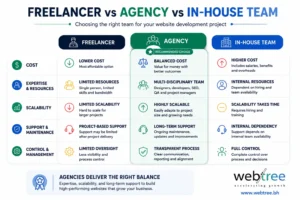
For most growing businesses, agencies often provide the best balance between cost, expertise, and scalability.
📖 Also Read
Before selecting a development partner, it’s important to understand the factors that influence app development budgets. Explore the key cost drivers, pricing models, and budgeting considerations for mobile app projects.
→ Guide to Mobile App Development Costs
How to Budget for Website Development
A structured budget reduces project risks and improves decision making.
Define Business Objectives
Clearly identify what the website should achieve, whether lead generation, sales, bookings, or customer support.
Prioritize Features
Separate essential features from future enhancements.
Build an MVP First
Launching a minimum viable product allows businesses to validate ideas before investing in advanced functionality.
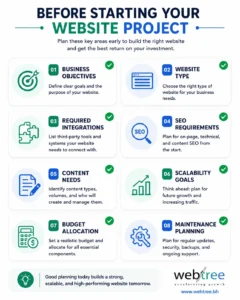
Plan for Maintenance
Include annual maintenance costs in the overall budget.
Allocate SEO Budget
Development and SEO should work together from day one.
Create a Contingency Fund
Reserve approximately 10% to 15% of the project budget for unexpected requirements.
Tips to Reduce Website Development Costs Without Compromising Quality
Choose Scalable Architecture
Building for future growth minimizes redevelopment costs later.
Reuse Proven Components
Leveraging established frameworks and modules reduces development time.
Invest in UX Early
Fixing usability issues after launch is often more expensive than addressing them during planning.
Build in Phases
Launch core functionality first and expand gradually.
Optimize Integrations
Only implement integrations that provide measurable business value.
Focus on Business Outcomes
Avoid unnecessary features that increase development costs without improving performance or conversions.
Why Businesses Choose Webtree for Website Development
Businesses require more than just a website. They need a digital platform that supports growth, customer engagement, and operational efficiency.
Webtree Software Solutions delivers:
- Custom website development tailored to business requirements
- SEO-first development practices
- Mobile responsive user experiences
- High performance architecture
- Secure and scalable solutions
- eCommerce development expertise
- Technology consultation services
- Long term maintenance and support
- Global project delivery capabilities
Whether you need a business website, eCommerce platform, corporate portal, or custom web application, Webtree helps transform ideas into scalable digital solutions.
Website development costs in 2026 vary widely based on functionality, complexity, technology, and business objectives. While a simple business website may require small investments, advanced eCommerce platforms and custom web applications require larger investments.
The growing importance of digital channels is reflected in industry research showing that the majority of small businesses now maintain an online presence, making website performance, user experience, and scalability increasingly important competitive factors. [Source: Clutch Small Business Website Report ]
The key is not choosing the cheapest option but selecting a development partner capable of delivering long term value, scalability, security, and performance.
By understanding pricing factors, budgeting properly, and planning for future growth, businesses can make smarter investments and maximize the return from their digital presence. If you’re planning a new website or upgrading an existing one, consult with our team to discuss the right approach for your business goals and budget.
Frequently Asked Questions
Should businesses choose WordPress, Shopify, or custom development for long term growth?
The ideal platform depends on business goals. WordPress works well for content-driven websites, Shopify is excellent for eCommerce businesses, while custom development offers maximum flexibility for unique business requirements.
How often should a business website be redesigned or upgraded?
Most websites benefit from major upgrades every three to five years, with regular performance, security, and feature updates throughout their lifecycle.
Can an existing website be improved instead of building a new one?
Yes. Many businesses can achieve significant improvements through redesigns, performance optimization, SEO enhancements, and feature upgrades without a complete rebuild.
Does investing more in website development guarantee better SEO performance?
Not necessarily. SEO success depends on website structure, content quality, technical optimization, user experience, and ongoing marketing efforts rather than development cost alone.
What questions should businesses ask before hiring a website development company?
Businesses should ask about previous projects, technology expertise, development processes, maintenance support, SEO capabilities, timelines, and scalability considerations.
How can businesses estimate ROI from a new website?
ROI can be measured through lead generation, online sales, customer acquisition costs, conversion rates, operational efficiencies, and revenue growth generated by the website.