Key Takeaways
- There is no fixed app development cost. The final budget depends on factors such as app complexity, features, integrations, platform choice, security requirements, and scalability.
- App complexity has the biggest impact on pricing. Basic MVPs cost significantly less than mid-level business apps or enterprise applications with advanced functionality and integrations.
- Features drive development costs. User authentication, payment gateways, booking systems, AI capabilities, dashboards, and third-party integrations all increase development effort and budget.
- Cross-platform development can reduce costs. Frameworks like Flutter and React Native allow businesses to build for both Android and iOS using a single codebase, lowering development and maintenance expenses.
- Development is only part of the total investment. Planning, testing, deployment, hosting, maintenance, security updates, and future enhancements should all be included in your budget calculations.
- Launching an MVP helps reduce risk. Building a Minimum Viable Product first allows businesses to validate ideas, gather user feedback, and control initial development costs before scaling.
- Proper planning leads to better budget control. Clearly defining project scope, user requirements, integrations, and long-term goals helps businesses avoid unexpected expenses and maximize return on investment.
Building a mobile app is one of the most effective ways for businesses to improve customer engagement and create new revenue opportunities. However, one question comes up before every project begins, that is How much will my app cost?
The truth is that there is no fixed answer. App development costs can vary significantly depending on the type of application, required features, technology stack, platform selection, and long-term business goals.
A simple mobile application with basic functionality will cost far less than a large enterprise platform with integrations, artificial intelligence, and advanced security requirements.
Understanding what influences app development costs can help businesses plan realistic budgets, prioritize the right features, and avoid unexpected expenses during development.
This complete guide to estimating app development costs explains the major cost factors, development approaches, and budgeting considerations for businesses in Bahrain and across the GCC.
How Much Does App Development Cost in Bahrain?
The cost of developing an app for the GCC region depends largely on its complexity and functionality. Basic MVP will differ greatly with mid-level business apps and enterprise applications.
The biggest factors affecting app development cost are not simply development hours. App complexity, third-party integrations, platform choice, scalability requirements, and ongoing maintenance often have the greatest impact on the final budget.
What Determines App Development Costs?
Every app is unique. Two applications may appear similar on the surface but have completely different technical requirements behind the scenes.
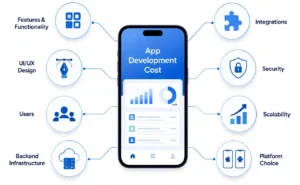
Several factors influence the overall mobile app development cost.
Features and Functionality
The more features an app contains, the more development time is required.
Examples include:
- User registration and login
- AI-powered recommendations
Each feature adds complexity and development effort, thereby increasing costs.
Number of Screens
An application with five screens is significantly easier to build than one with fifty screens. More screens require additional design, development, testing, and user experience planning.
User Roles
Different user types often require separate dashboards and permissions.
For example:
Each role adds additional development requirements.
Third-Party Integrations
Businesses frequently require integration with:
Integrations increase both development complexity and testing requirements.
Design Requirements
Custom UI/UX design often improves user experience and brand identity but can increase project costs compared to standard design templates.
Backend Infrastructure
Applications that store large amounts of data require reliable backend architecture, databases, cloud hosting, and security measures.
Security Requirements
Industries such as healthcare, finance, and logistics often require advanced security measures, increasing development effort and compliance requirements.
Scalability
Apps built for future growth need stronger infrastructure and architecture, which can affect initial development costs but reduce future redevelopment expenses.
App Development Cost by Complexity
One of the easiest ways to estimate costs is by understanding the complexity level of the application.
Basic Applications
Basic applications typically focus on a small set of essential features.
Common features include:
These applications are commonly used for:
Since functionality is relatively limited, development costs are generally lower.
Mid-Level Applications
Mid-level applications require more advanced business functionality.
Common features include:
These applications are often used by:
Development costs increase because of the additional backend systems and integrations involved.
Enterprise and AI Applications
Enterprise applications typically involve large-scale business operations and advanced functionality.
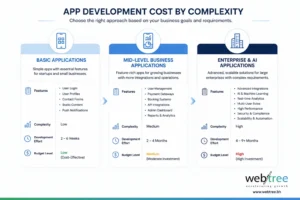
Features may include:
- AI-powered recommendations
- Real-time synchronization
- Advanced reporting and analytics
These applications are often developed for:
Enterprise applications require extensive planning, security, testing, and infrastructure, making them the most expensive category.
Native vs Cross-Platform Development: Which Costs More?
Platform selection is one of the biggest factors influencing app development pricing.
Native Development
Native apps are built separately for Android and iOS.
Advantages include:
- Better device optimization
- Full access to device features
However, separate development teams and codebases often increase project costs.
Cross-Platform Development
Cross-platform frameworks allow developers to create one application that works on both Android and iOS.
Advantages include:
For many businesses, cross-platform development offers an efficient balance between performance and budget.
Flutter and React Native
Frameworks such as Flutter and React Native have become popular because they reduce development time while maintaining a high-quality user experience.
Businesses launching on both Android and iOS often choose these technologies to reduce their custom app development cost while reaching a larger audience.
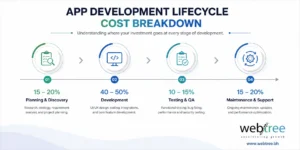
App Development Lifecycle Cost Breakdown
Many businesses assume development is the only cost involved in building an app. In reality, successful applications require investment throughout the entire development lifecycle.
Planning and Discovery
This phase defines project goals, requirements, user journeys, and technical architecture with a budget allocation between 15-20%
Proper planning helps avoid costly changes later.
Development
This is typically the largest portion of the budget and includes frontend, backend, and integration development with a large percentage of the budget, that is, around 40-50%
Testing and Quality Assurance
Testing ensures the application performs correctly across devices, operating systems, and user scenarios. 10-15% of the budget is generally allocated to the quality assurance stage
Maintenance
After launch, ongoing maintenance is essential to keep the application secure, stable, and compatible with future operating system updates. The phase require 15-20% of the annual budget.
Hidden Costs Businesses Often Overlook
Many businesses budget for development but overlook additional expenses that arise after launch, such as
App Store Fees
Publishing apps on app marketplaces may involve registration and renewal fees.
Cloud Hosting
Most applications require hosting services to store data and support user activity.
API Usage Costs
Some third-party APIs charge usage-based fees that increase as the application grows.
Third-Party Integrations
Payment gateways, communication services, and analytics platforms may involve recurring costs.
Security Updates
Cybersecurity threats continue evolving, making regular updates essential.
Maintenance and Support
Bug fixes, performance improvements, and compatibility updates are ongoing requirements.
Future Enhancements
Most successful applications continue adding features based on customer feedback and business growth.
How Platform Choice Impacts Development Cost
Different development technologies can significantly affect project budgets. For example:
Native Development include
- Separate Android and iOS development
Flutter
- Strong performance across platforms
React Native
- Cross-platform development
- Large developer ecosystem
- Cost-effective development
The right choice depends on business goals, user expectations, and available budget.
Should You Build an MVP First?
Many businesses make the mistake of trying to launch every possible feature at once.
A better approach is often to build an MVP (Minimum Viable Product).
An MVP includes only the core functionality needed to validate the business idea.
Benefits of an MVP
Lower Initial Investment
Businesses spend less money upfront by focusing only on essential features.
Faster Launch
Products reach the market sooner, allowing businesses to begin gathering customer feedback.
Reduced Risk
Businesses can test demand before investing heavily in advanced functionality.
Easier Scaling
Features can be added gradually based on real user behavior and business requirements.
For startups and growing businesses, an MVP is often the smartest way to manage app development costs.
App Development Costs for Bahrain and GCC Businesses
Businesses in Bahrain and the GCC often face unique considerations when planning mobile applications.
Several regional factors can influence overall project costs.
Development Team Location
Businesses may choose:
- Regional technology partners
- Offshore development providers
Each option offers different pricing structures and collaboration benefits.
Arabic Language Support
Applications targeting GCC users often require Arabic and English language support, which increases development and testing requirements.
Payment Integrations
Local and regional payment gateways may require additional integration work.
Regulatory Requirements
Industries such as healthcare, finance, and government services may have compliance requirements that impact development costs.
Enterprise Requirements
Many GCC businesses require custom workflows, ERP integrations, and business process automation, increasing overall project complexity.
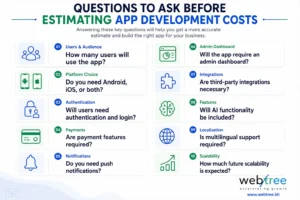
How to Estimate Your App Budget Before Development
Before requesting proposals, businesses should prepare a basic project checklist.
Real Success Starts with Proper Planning
Many successful digital products begin with careful planning rather than coding.
Defining project scope, prioritizing features, and validating business requirements helps organizations reduce costs and improve long-term success.
Webtree follows a structured discovery and planning process to ensure every solution aligns with business objectives before development begins.
By identifying business needs early, organizations can avoid unnecessary development expenses and focus on features that deliver measurable value.
Explore how Webtree has helped businesses across the GCC streamline operations, improve efficiency, and accelerate digital transformation through custom technology solutions.
Why Choose Webtree for Custom App Development?
Choosing the right development partner is just as important as setting the right budget.
Webtree helps businesses across Bahrain and the GCC build scalable, user-focused digital solutions through:
- Business-first development approach
- Custom Android and iOS applications
- Flutter and cross-platform expertise
- Agile development methodology
- Post-launch support and maintenance
- Experience across multiple industries
Whether you are launching a startup product, modernizing business operations, or building an enterprise platform, Webtree provides the technical expertise and strategic guidance needed to achieve your goals.
Frequently Asked Questions
How much does it cost to build a mobile app?
App costs vary depending on complexity, features, and platform requirements. Basic MVP cost will differ greatly from enterprise applications.
What is the biggest factor affecting app development cost?
Feature complexity, platform selection, third-party integrations, security requirements, and long-term maintenance are among the biggest cost drivers.
Is Flutter cheaper than native app development?
In many cases, yes. Flutter uses a single codebase for Android and iOS, reducing development time and lowering maintenance costs.
Should startups build an MVP first?
Yes. An MVP helps startups validate ideas, collect user feedback, and reduce upfront investment before expanding functionality.
How long does app development take?
Simple applications may take two to four months to develop. Enterprise applications with advanced integrations and custom functionality may require six to twelve months or more.